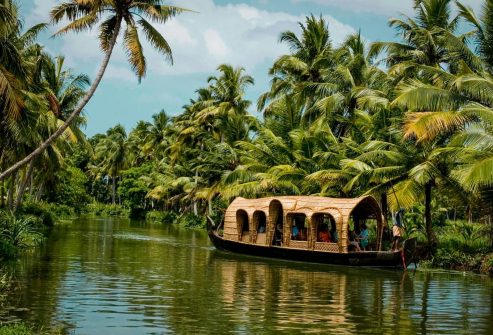
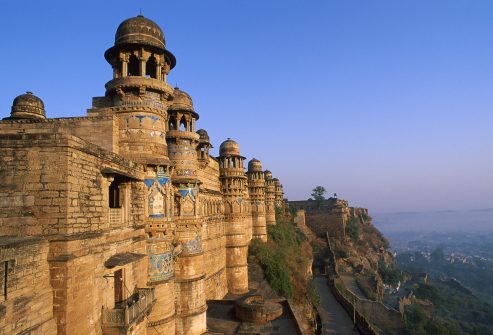
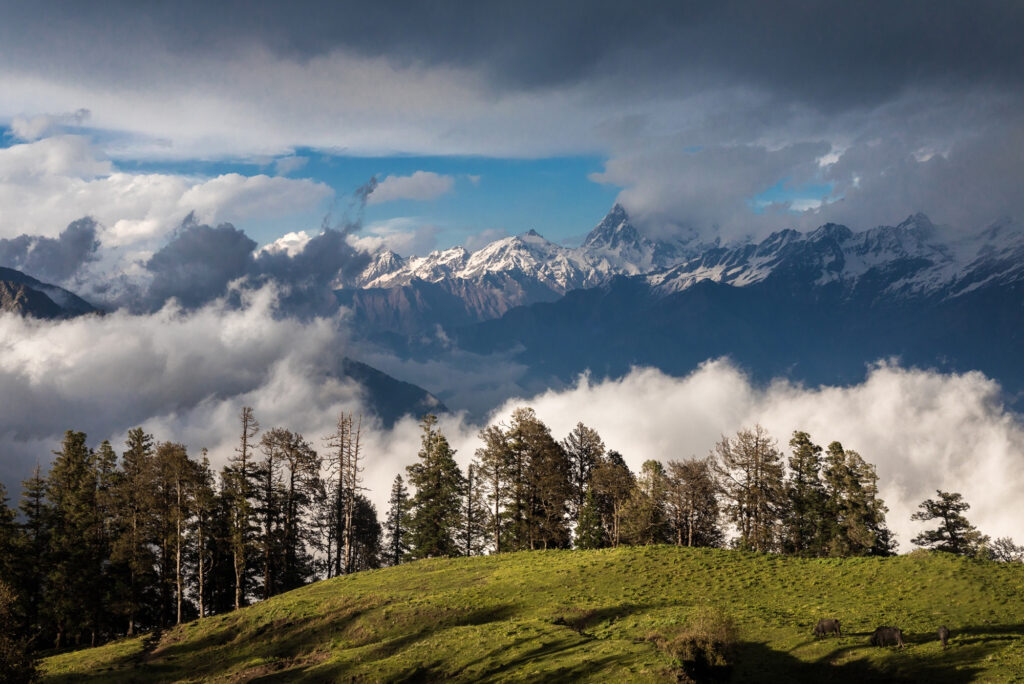
Central India Grand Tour 01 Bhopal, 03 Pachmarhi 01 Jabalpur & 02 Kanha


About Description
Start in the city of lakes, Bhopal, before ascending to the lush hills of Pachmarhi, the state’s only hill station. Experience the iconic marble rocks of Jabalpur, then head into the wild at Kanha National Park, one of India’s top tiger reserves.
Inclusion
- Accommodation at all places on twin sharing basis
- Meal as per mentioned with Hotels
- All transfers and excursions as per itinerary by respective car as mentioned above
Exclusion
- Guide Can be provided at Bhopal, Sanchi and Bhimbetka at extra cost
Bhopal Heritage walk Guide Cost Rs. 4000 (Up to 6 Person) - Bhimbetka Guide Cost Rs. 2500
- Sanchi Guide Cost Rs. 2500
- Kanha: Rs 10500.00 Per Jeep Per Safari with Bison/Tuli Tiger Resort/Similar
- Kanha: Rs 13650.00 Per Jeep Per Safari with Kanha Earth Lodge/Similar
- Wednesday -second half sightseeing is closed for maintenance.
- Air Fare/Train Fare & all entry fees at sightseeing spots
- Items of personal nature like portage, tips, laundry, telephone calls, mineral water etc.
- Optional Activities mentioned in the itinerary
- GST 5% Over and above on Main Prices & optional services.
- Expenses caused by factors beyond our control like rail and flight delays, roadblocks, vehicle mal-functions, political disturbances etc.
- Entrance fees to monuments and museum
- All personal expenses
- Anything not mentioned in the inclusions list
- All domestic and international flights, other meals, tips, drinks, international airport tax, single room supplements, peak season surcharges, personal expenses, travel insurance, visas, any optional additional tours or activities during free time, early check in/late check- out at your hotel, Covid tets and anything related to covid
- Lunch/dinner at hotels
- Room service
- Telephone calls and laundry
- Any portage at airports and hotels, tips, insurance, wine ,mineral water, telephone charges, guide charges, boating charges, entrance fees and all items of personal nature
- Any service not specified in inclusions
- 5 % GST
Payment Policy
- 100 % Advance 15 Days Before Departur
Cancellation Policy
- 100 % Applicable 15 days before departure
Terms & Conditions
- This package valid for minimum 2 Pax travelling together.
- We don’t hold any hotel rooms at this time.
- The price will not be applicable for peak season.
- We offer above hotels /or same similar class another hotels upon availability.
Itinerary
Day 1
Arrive Bhopal – Sanchi - Bhopal (02 Hrs one way)

- Morning Pickup from Bhopal Airport/Railway Station and transfer to Hotel. Check in to the Hotel. Later proceed to Sanchi. Visit Sanchi Stupas
(UNESCO World Heritage Site) and Udaygiri Caves. Later back to Bhopal Hotel. Night stay in Bhopal. - Sanchi Stupas was originally commissioned by the Mauryan emperor Ashoka the Great in the 3rd century BCE. Its nucleus was a simple hemispherical brick structure built over the relics of the Buddha. It was crowned by the chatra, a parasol-like structure symbolising high rank, which was intended to honour and shelter the relics. The original construction work of this stupa was overseen by Ashoka, whose wife Devi was the daughter of a merchant of nearby Vidisha. Sanchi was also her birthplace as well as the venue of her and Ashoka’s wedding.
Day 2
Bhopal– Bhimbetka (01 – 02 Hrs) - Pachmarhi (04 - 05 Hr)
- After Breakfast proceed to Pachmarhi. En-route visit the Bhojpur Temple and Bhimbetka (UNESCO World Heritage Site). Check in to the Pachmarhi Hotel & relax. Night stay at Pachmarhi.
- Bhojpur Temple’s construction is believed to have started in the 11th century, during the reign of the Paramara king Bhoja. The construction was abandoned for unknown reasons, with the architectural plans engraved on the surrounding rocks. The unfinished materials abandoned at the site, the architectural drawings carved on the rocks, and the mason’s marks have helped scholars understand the temple construction techniques of 11th-century India.
- Bhimbetka is a UNESCO World Heritage Site that consists of seven hills and over 750 rock shelters which were inhabited more than 100,000 years ago. The rock shelters and caves provide evidence of human settlement and the cultural evolution from hunter-gatherers to agriculture, and expressions of prehistoric spirituality. Some of the Bhimbetka rock shelters feature prehistoric cave paintings and the earliest are about 10,000 years old corresponding to the Indian Mesolithic. These cave paintings show themes such as animals, early evidence of dance and hunting from the Stone Age as well as of warriors on horseback from a later time. The Bhimbetka site has the oldest-known rock art in India, as well as is one of the largest prehistoric complexes.
Day 3
Pachmarhi Sightseeing by Gypsy
- After breakfast, proceed for sightseeing by Gypsy, Visit Bison Museum, Pandav Caves, Bee Fall, ReechGarh and Dhoopgarh. Night stay in Pachmarhi.
- Pachmarhi: The name Pachmarhi is believed to be derived from the Hindi words Panch (“five”) and Marhi (“caves”). According to a legend, these caves were built by five Pandava brothers of Mahabharatha era during their thirteen years of exile. The caves are situated on a hilltop and provide an excellent vantage point. Pachmarhi, also known as Satpura ki Rani, is a hill station in the central Indian state of Madhya Pradesh.
- Bison Museum : Small museum dedicated to animals & plants featuring life-sized sculptures depicting local wildlife. It is a lovely museum exhibiting paintings / photos of the bio-diversity of Pachmarhi . The exhibits are housed in two bungalows . It depicts the history of Pachmarhi . It is quite informative.
- Pandav Caves: 5 hilltop caves believed to have been carved more than 1,000 years ago, with a formal garden below. The Pandav Caves were cut into a low hill. Buddhist monks created the caves anytime from the first century AD to the 10th century AD.
- Bee Fall: This is a waterfall in Pachmarhi. It is so named because from a distance the waterfall sounds like a bee. Bee Falls takes its name from bees since this place is famous for honey bees.
- Reechgarh – one of the biggest natural cave in Pachmarhi. Reech stands for Bear and the cave is said be the place for bears. Quite a massive cave and very interesting inside. The place is very picturesque and a rough terrain.
- Dhoopgarh is the highest point in the Mahadeo Hills (Satpura Range). it has an elevation of 1,352 metres (4,429 ft). The top of the hill is a popular area to watch sunsets.
Day 4
Pachmarhi Sightseeing
- After breakfast, proceed for sightseeing Handi khoh, Priyadarshini, Gupt Mahadev, Lake and Rajendragiri. Night stay in Pachmarhi.
Handi Khoh is Pachmarhi’s most impressive ravine. It has a 300 ft high precipice, which dramatically cuts down deep into the bowels of the earth. This is a lonely place where water flows far below with an incessant mumuring sound. Overhanging crags shelter huge, undisturbed beehives to the sheer rock face. The ravine is said to be named after an eccentric Englishman who set out to explore the ravines in a state of drunkenness lost balance and fell to his death. - Priyadarshini Point is the hilltop from where you get an eagle’s eye view of the entire town. This is the place from where Captain James Forsyth discovered Pachmarhi in the year 1857. One can get a beautiful view of the entire Pachmarhi valley and especially Handi Khoh from here. The entire place has hills rolling on each other and surrounded by clouds and mist, the entire scenery is worth enjoying. Also, it is an ideal place to see the sunset in the majestic Satpura Range.
Gupt Mahadev is a 40 feet long cave dedicated to Lord Shiva. Snuggled cozily amidst the Mahadeo Hills, this temple houses a Shivalinga, and Lord Ganesha. With a Lord Hanuman Statue at the entrance, the path is narrow and meandering where only 7 to 8 people can get inside at a time. One has to literally squeeze or move sideways to go inside. The place is quite an interesting and mysterious spot near Pachmarhi where spirituality meets adventure.
Pachmarhi Lake is a man made water-body, but its serene and scenic surroundings along a vast expanse makes you feel like you are floating in a natural paradise. - Pachmarhi lake is an ideal venue for boating as well as food stalls are also available for visitors.
- Rajendragiri park – this gives another view of the Satpura range of hills. This is a sunset point. Importantly, one gets to see the highest point – Chauragarh from there.This is named after Dr. Rajendra Prasad, the first President of India.
Day 5
Pachmarhi - Jabalpur (05 - 06 Hrs Drive)
- After Breakfast, Proceed to Jabalpur, Check in to the Hotel and Relax. Later visit Madan Mahal, Balancing
rock and Kachnar City Shiv Statue. Evening visit Narmada River Aarti at Gauri Ghat. Night stay in Jabalpur. - Madan Mahal is a enchanting fort of the Rajgond rulers. It was more of a staffed post on vigil for invaders now enveloped in shroud of history. The fort dates back to 11th century AD. The fort is well associated with Rani Durgavati the Gond Queen and her son Veer Narayan. Rani Durgavati eventually died fighting the Mughals, and is hailed as a martyr in Indian history. She also built numerous temples and tanks scattered around Jabalpur chiefly around her Garha principality.
Balancing Rock is a natural wonder, It’s the set of seemingly delicately balanced eroded volcanic rock formations. Although they look precariously positioned, they have withstood earthquakes of magnitude up to 6.5 on the Richter scale. No wonder that the locals believe these rocks to be as invincible as they are incredible. One rock is balanced on a huge base rock and only touches it slightly. The point of contact between the two rocks is only 6 sq inches. It is believed that it is impossible to disturb the balance of this rock. - Kachnar City Shiv Statue: The charismatic idol of Lord Shiva is nestled in the Kachnar city and is reckoned among the most sacred tourist spots in Jabalpur. The statue is about 76 feet tall and is truly a sight to behold. The statue is built under the open sky on the cavern which has the replicas of the 12 Jyotirlings and these 12 Lingam has been collected from various shrines of Lord Shiva throughout the country.
- Gwari Ghat: Hindus perform their cremation rites here as per Garuda Purana. It is associated with Hindu Puranas, also; due to the presence of Narmada Sidh Kund, near Uma Ghat, wherein renowned Rishis performed Tapas (Indian religions), and it is believed that people are cured of their ailments here. Maa Narmada Temple is also situated here, where Narmada Aarti, is performed in the evenings.
Day 6
Jabalpur –Bhedaghat - Kanha (04 - 05 Hrs Drive)
Morning Check out and proceed to Bhedaghat. Enjoy the boating in between the amazing colored Marble rocks. Jabalpur is most known for the marble
canyon of Bhedaghat. Also enjoy the sightseeing of Dhuandhar Falls. Later Proceed to Kanha. Check in to the Hotel and Relax. Night stay in Kanha. Bhedaghat is famous for the high marble rocks making a valley through which river Narmada flows. The place also has a beautiful waterfall, known as Dhuandhar Falls (literally meaning a stream of smoke, because of its appearance).
Day 7
Kanha Safari
Morning or Afternoon Safari at Kanha National Park by Exclusive Gypsy. Overnight at Kanha Hotel. Kanha Tiger Reserve, also known as Kanha–Kisli National Park, is one of the tiger reserves of India and the largest national park of the state of Madhya Pradesh. Together with a surrounding buffer zone of 1,067 km2 (412 sq mi) and the neighbouring 110 km2 (42 sq mi) Phen Sanctuary, it forms the Kanha Tiger Reserve, which is one of the biggest in the country. This makes it the largest national park in central India. Kanha Tiger Reserve hosts populations of Bengal tiger, Indian leopard, dhole, sloth bear, Bengal fox and Indian jackal. The barasingha is adapted to swampy areas. The gaur inhabits meadows and waterholes in the park. Blackbuck has become very rare. Kanha Tiger Reserve is home to over 1000 species of flowering plants. The lowland forest is a mixture of sal and other mixed-forest trees, interspersed with meadows. The highland forests are tropical moist, dry deciduous type and of a completely different nature from bamboo on slopes. A notable Indian ghost tree can also be seen in the dense forest. Afternoon Safari Drives Will Not Be Conducted On Wednesdays

Day 8
Kanha – Jabalpur Departure (04 – 05 Hrs.)
After Breakfast, Checkout and Proceed to Jabalpur Airport/ Railway Station for your onward Journey.