
Madhya Pradesh Trio Tour 02 Bhopal, 02 Pachmarhi, 02 Kanha


About Description
Embark on a soul-stirring journey through the heart of India. This tour blends heritage, nature, and wildlife as you explore the vibrant city of Bhopal, the scenic hill station of Pachmarhi, and the lush wilderness of Kanha National Park – one of India’s finest tiger reserves. Ideal for nature lovers, history buffs, and wildlife enthusiasts alike.
Inclusion
- Accommodation at all places on twin sharing basis
- Meal as per mentioned with Hotels
- All transfers and excursions as per itinerary by respective car as mentioned above
Exclusion
- Guide Can be provided at Bhopal, Sanchi and Bhimbetka at extra cost
Bhopal Heritage walk Guide Cost Rs. 4000 (Up to 6 Person) - Bhimbetka Guide Cost Rs. 2500
- Sanchi Guide Cost Rs. 2500
- Kanha: Rs 10500.00 Per Jeep Per Safari with Bison/Tuli Tiger Resort/Similar
- Kanha: Rs 13650.00 Per Jeep Per Safari with Kanha Earth Lodge/Similar
- Wednesday -second half sightseeing is closed for maintenance.
- Air Fare/Train Fare & all entry fees at sightseeing spots
- Items of personal nature like portage, tips, laundry, telephone calls, mineral water etc.
- Optional Activities mentioned in the itinerary
- GST 5% Over and above on Main Prices & optional services.
- Expenses caused by factors beyond our control like rail and flight delays, roadblocks, vehicle mal-functions, political disturbances etc.
- Entrance fees to monuments and museum
- All personal expenses
- Anything not mentioned in the inclusions list
- All domestic and international flights, other meals, tips, drinks, international airport tax, single room supplements, peak season surcharges, personal expenses, travel insurance, visas, any optional additional tours or activities during free time, early check in/late check- out at your hotel, Covid tets and anything related to covid
- Lunch/dinner at hotels
- Room service
- Telephone calls and laundry
- Any portage at airports and hotels, tips, insurance, wine ,mineral water, telephone charges, guide charges, boating charges, entrance fees and all items of personal nature
- Any service not specified in inclusions
- 5 % GST
Payment Policy
- 100 % Advance 15 Days Before Departur
Cancellation Policy
- 100 % Applicable 15 days before departure
Terms & Conditions
- This package valid for minimum 2 Pax travelling together.
- We don’t hold any hotel rooms at this time.
- The price will not be applicable for peak season.
- We offer above hotels /or same similar class another hotels upon availability.
Itinerary
Day 1
Arrive Bhopal and Sightseeing

- Pick up from Bhopal Airport / Railway station. Transfer to Hotel. Check in to the Hotel & relax. Later proceed to visit Local Bhopal Sightseeing. Visit Gohar Mahal, Shaukat Mahal, Bharat Bhavan, Mankind Museum and Tribal Museum. Evening Spend time at Upper Bhopal Lake. Night stay in Bhopal.
- Maximum 6 Person in one Gypsy / Jeep
- Gohar Mahal is a unique amalgamation of Hindu and Mughal architecture, Gohar Mahal was built by Qudisiya Begum or Gohar Begum, the ruler of Bhopal. It was constructed in 1821 and boasts a spacious hall overlooking a beautiful lake in the vicinity.
- Shaukat Mahal was constructed in the 1830s as a wedding gift for Sikander Jehan Begum, the first full-fledged female ruler of Bhopal. It is an integral part of the famous royal quadrangle of Bhopal around the Iqbal Maidan, earlier known as Khirniwala Maidan.
- Bharat Bhavan is an autonomous multi-arts complex and museum. Its have architect of the Bharat Bhavan is Charles Correa. Opened in 1982. it houses multiple art galleries, a graphic printing workshop, a ceramics workshop, an open-air amphitheatre, a studio theatre, an auditorium, a museum of tribal & folk art, and libraries of Indian poetry, classical music & folk music.
- The Tribal Museum was designed by Revathi Kamath. It was inaugurated in 2013. The museum is divided into six different themes galleries showcasing traditional art, craft and culture of various tribes of Madhya Pradesh like Gonds, Bhils, Bharias, Sahariya, Korku, Kol, and Baiga.
- Upper Lake is The lake is also known as Bada Talab (“Big Pond”) until March 2011 it was renamed to Bhojtaal in honour of the Great King Raja Bhoj who built it. A huge statue of Raja Bhoj, standing with sword, was also installed on a pillar on one corner of the lake to cement the name of Bhopal as the city of lakes.
- Note: Bharat Bhawan, Tribal Museum and Mankind Museum remain closed on Mondays.
Day 2
Bhopal – Sanchi (1.5 Hrs) – Gyaraspur (01 Hr) - Bhopal (2.5 hrs drive one way)
- After breakfast, proceed to Sanchi. Visit Sanchi Stupas (UNESCO World Heritage Site) and Udaigiri Caves. Later proceed to Gyaraspur and Visit Maladevi, Hindola torna and Bajramath Temple. Later You will come back to Bhopal in the evening. Overnight stay at Bhopal.
Tip: Guide recommended for Sanchi. - Sanchi Stupas was originally commissioned by the Mauryan emperor Ashoka the Great in the 3rd century BCE. Its nucleus was a simple hemispherical brick structure built over the relics of the Buddha. It was crowned by the chatra, a parasol-like structure symbolising high rank, which was intended to honour and shelter the relics. The original construction work of this stupa was overseen by Ashoka, whose wife Devi was the daughter of a merchant of nearby Vidisha. Sanchi was also her birthplace as well as the venue of her and Ashoka’s wedding.
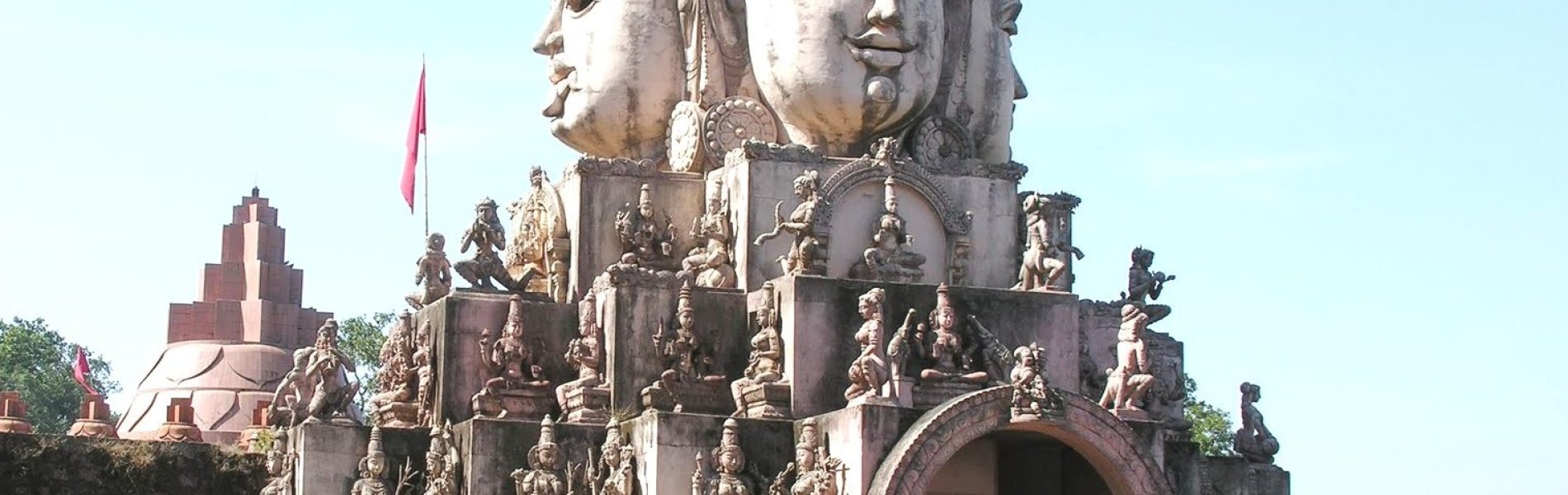
- Gyaraspur was of considerable importance in medieval India. The place has several ruins of several old Hindu, Jain and Buddhist places of worship. These include Maladevi Temple, Hindola Torna and the Bajramath Surya Temple Maladevi temple is in fact imposing and stupendous building. It comprise an entrance-porch, a hall and a shrine surrounded by a circumambulatory passage and crowned with a lofty Shikara all covered with rich carving.
- Hindola Torna is a large temple either of Vishnu or of Trimurti. The four sides of the two lofty pillars are carved into panels with insets of the ten incarnations of Vishnu.
- Bajramath Temple is a fine example of a very rare class of temples with three shrines. The carving of the doorway is exceptionally fine and vigorous.
Day 3
Bhopal – Bhimbetka (01-02 Hrs) - Pachmarhi (03 Hrs)
- After Breakfast proceed to Pachmarhi. En-route visit the Bhojpur Temple and Bhimbetka (UNESCO World Heritage Site). Check in to the Pachmarhi Hotel & relax. Night stay at Pachmarhi.
- Bhojpur Temple’s construction is believed to have started in the 11th century, during the reign of the Paramara king Bhoja. The construction was abandoned for unknown reasons, with the architectural plans engraved on the surrounding rocks. The unfinished materials abandoned at the site, the architectural drawings carved on the rocks, and the mason’s marks have helped scholars understand the temple construction techniques of 11th-century India.
- Bhimbetka is a UNESCO World Heritage Site that consists of seven hills and over 750 rock shelters which were inhabited more than 100,000 years ago. The rock shelters and caves provide evidence of human settlement and the cultural evolution from hunter-gatherers to agriculture, and expressions of prehistoric
spirituality. Some of the Bhimbetka rock shelters feature prehistoric cave paintings and the earliest are about 10,000 years old corresponding to the Indian Mesolithic. These cave paintings show themes such as animals, early evidence of dance and hunting from the Stone Age as well as of warriors on horseback from a later time. The Bhimbetka site has the oldest-known rock art in India, as well as is one of the largest prehistoric complexes.
Day 4
Pachmarhi Sightseeing by Gypsy
- After breakfast, proceed for sightseeing by Gypsy, Visit Bison Museum, Pandav Caves, Bee Fall, ReechGarh and Dhoopgarh. Night stay in Pachmarhi.
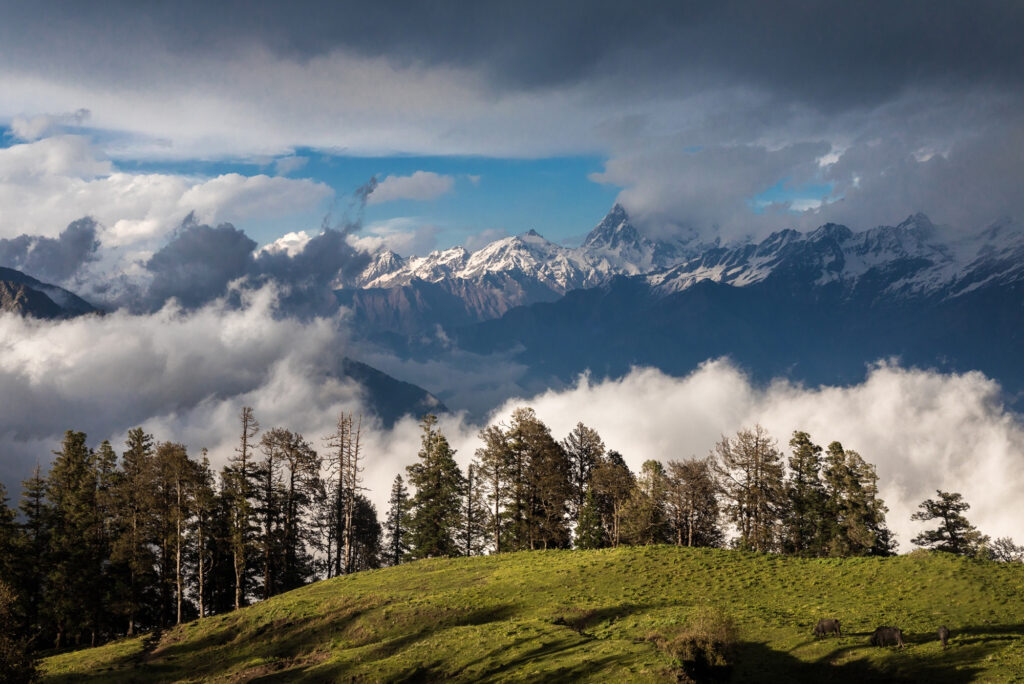
Tip: Local Gypsy need to book in advance for sightseeing to avoid walk. - Pachmarhi: The name Pachmarhi is believed to be derived from the Hindi words Panch (“five”) and Marhi (“caves”). According to a legend, these caves were built by five Pandava brothers of Mahabharatha era during their thirteen years of exile. The caves are situated on a hilltop and provide an excellent vantage point. Pachmarhi, also known as Satpura ki Rani, is a hill station in the central Indian state of Madhya Pradesh.
- Bison Museum : Small museum dedicated to animals & plants featuring life-sized sculptures depicting local wildlife. It is a lovely museum exhibiting paintings / photos of the bio-diversity of Pachmarhi . The exhibits are housed in two bungalows . It depicts the history of Pachmarhi . It is quite informative.
- Pandav Caves: 5 hilltop caves believed to have been carved more than 1,000 years ago, with a formal garden below. The Pandav Caves were cut into a low hill. Buddhist monks created the caves anytime from the first century AD to the 10th century AD.
- Bee Fall: This is a waterfall in Pachmarhi. It is so named because from a distance the waterfall sounds like a bee. Bee Falls takes its name from bees since this place is famous for honey bees.
- Reechgarh – one of the biggest natural cave in Pachmarhi. Reech stands for Bear and the cave is said be the place for bears. Quite a massive cave and very interesting inside. The place is very picturesque and a rough terrain.
- Dhoopgarh is the highest point in the Mahadeo Hills (Satpura Range). it has an elevation of 1,352 metres (4,429 ft). The top of the hill is a popular area to watch sunsets.
Day 5
Pachmarhi - Kanha (08 - 09 Hrs.)
After Breakfast, proceed for Kanha. Check in to the Hotel & relax. Overnight at Kanha Hotel.
Day 6
Kanha Safari
Morning or Afternoon Jeep Safari at Kanha National Park by Exclusive Gypsy. Overnight at Kanha Hotel.
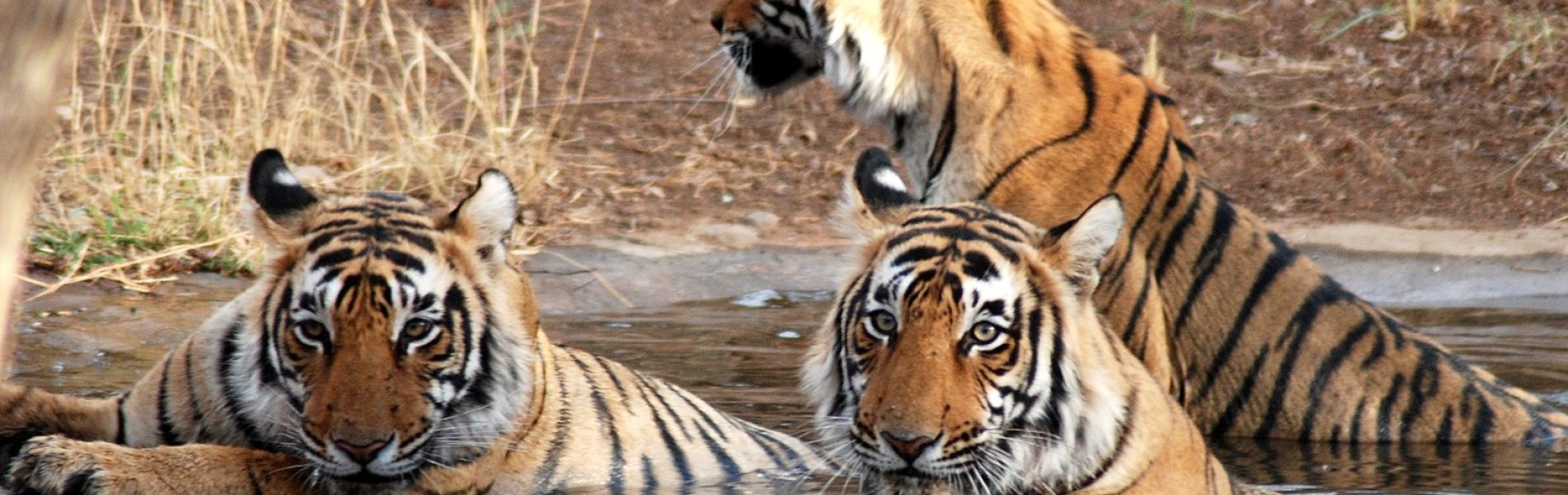
Kanha Tiger Reserve, also known as Kanha–Kisli National Park, is one of the tiger reserves of India and the largest national park of the state of Madhya Pradesh. Together with a surrounding buffer zone of 1,067 km2 and the neighbouring 110 km2 Phen Sanctuary, it forms the Kanha Tiger Reserve, which is one of the biggest in the country. This makes it the largest national park in central
India. Kanha Tiger Reserve hosts populations of Bengal tiger, Indian leopard, dhole, sloth bear, Bengal fox and Indian jackal. The barasingha is adapted to swampy areas. The gaur inhabits meadows and waterholes in the park. Blackbuck has become very rare. Kanha Tiger Reserve is home to over 1000 species of flowering plants. The lowland forest is a mixture of sal and other mixed-forest trees, interspersed with meadows. The highland forests are tropical moist, dry deciduous type and of a completely different nature from bamboo on slopes. A notable Indian ghost tree can also be seen in the dense forest.
Day 7
Kanha – Jabalpur Departure (04 - 05 Hrs.)
After Breakfast, Checkout and Proceed to Jabalpur Airport/Railways Station for your onward Journey.